
From Research Idea to Scopus Publication: KAU Discusses Strategies for Publishing in International Scientific Journals
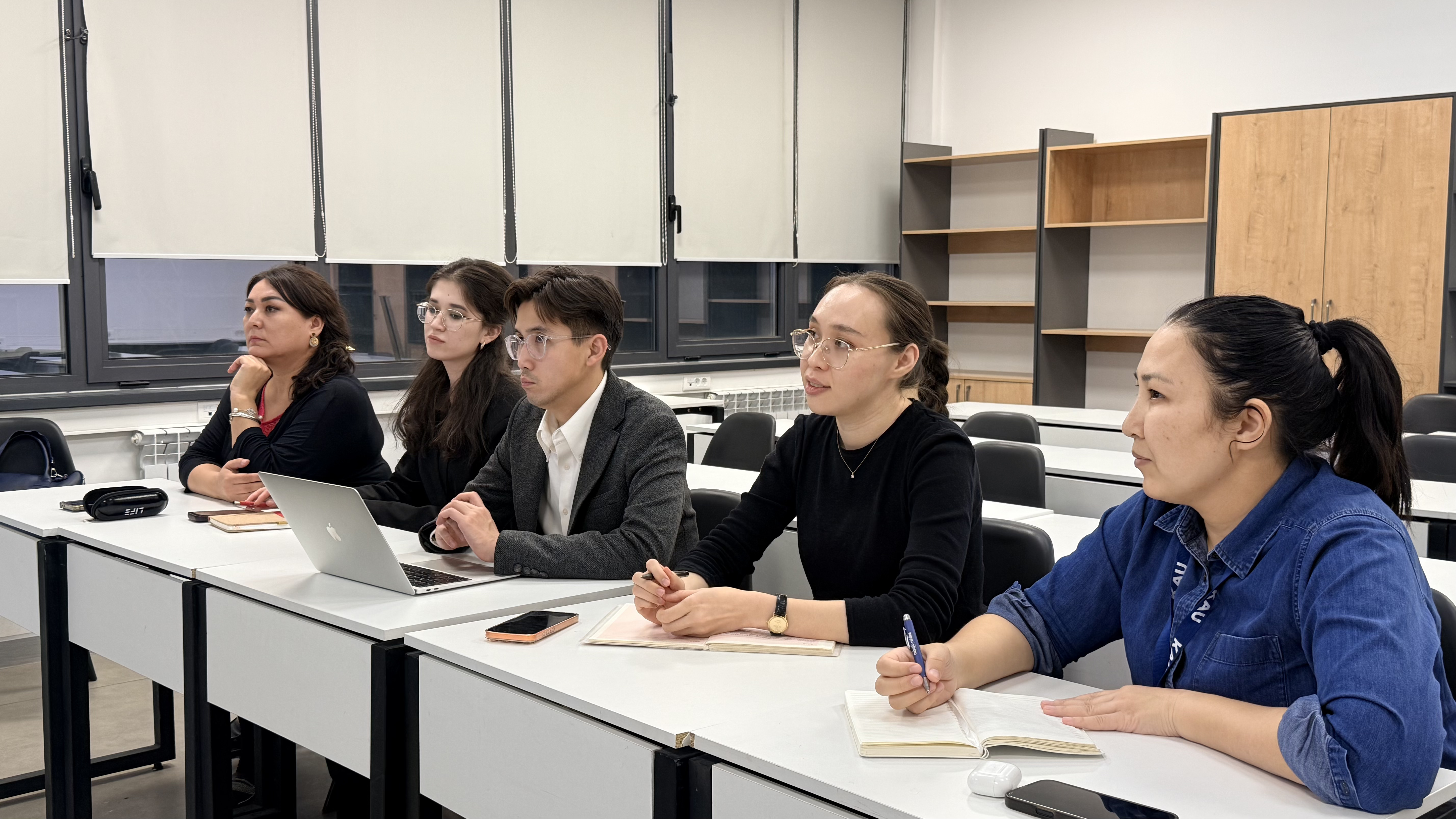
How can research findings be transformed into a scientific paper capable of passing peer review in a high-quartile international journal? What requirements must be met in terms of methodology, data analysis, and scientific argumentation? These questions were at the heart of a research seminar held on October 28, 2026, at the Kazakh-American University (KAU).
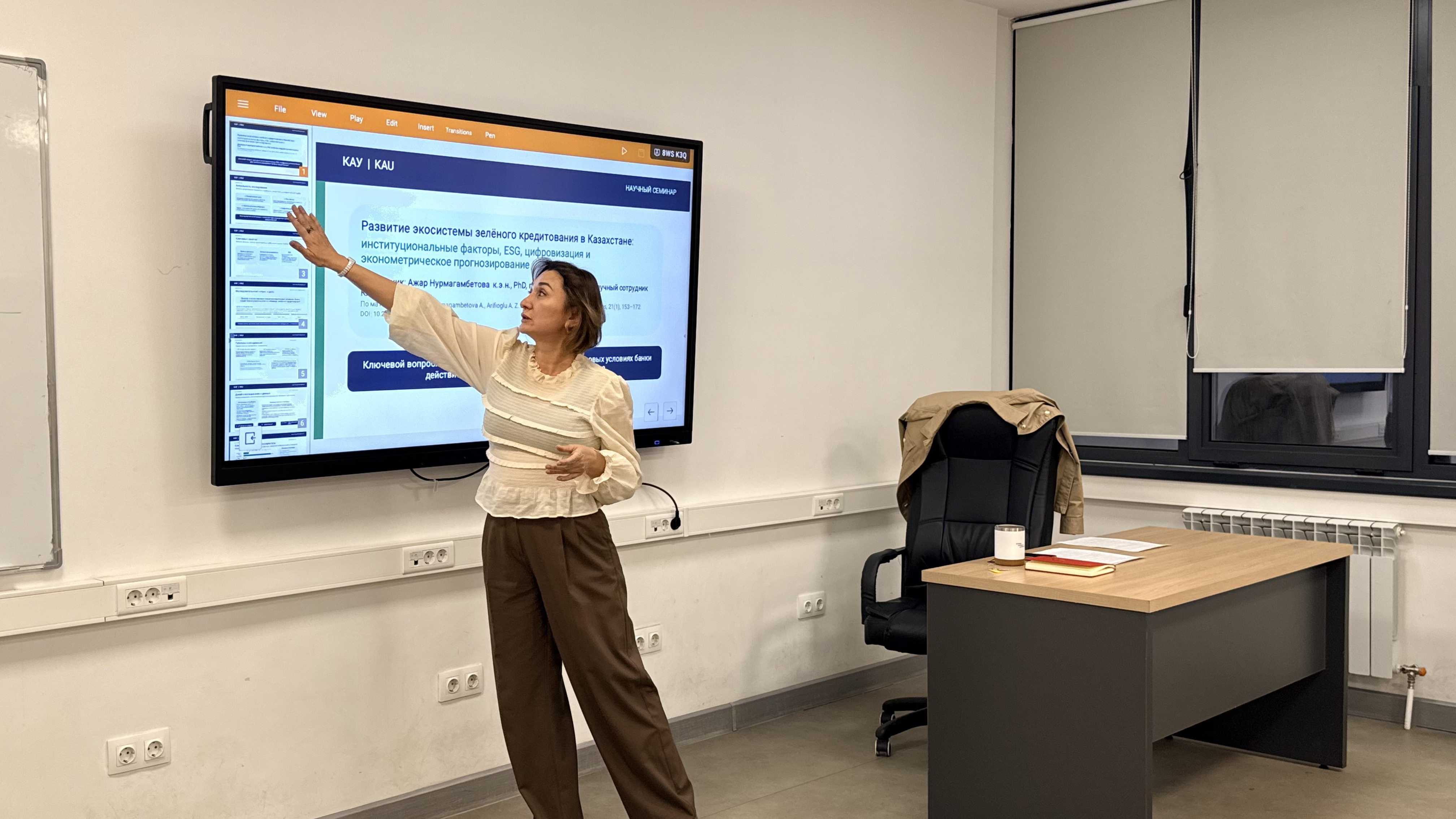
The seminar, titled “The Path to Q1 Scopus: Strategy, Methods, and a Practical Case Study,” was led by Azhar Nurmagambetova, Candidate of Economic Sciences, PhD, Professor, and Leading Research Fellow at KAU. The session drew on practical experience in preparing scientific publications and research into Kazakhstan’s green lending market.
What Does It Take to Publish in an International Scientific Journal?
Publishing in a high-ranking journal requires more than a relevant research topic. It also demands a clearly defined research problem, a well-justified methodology, reliable data, and findings that are of interest to the international research community.
During the seminar, participants explored the main stages of preparing a scientific paper, from selecting a research topic and establishing its scientific novelty to conducting empirical analysis, interpreting the findings, and formulating conclusions.
Particular attention was paid to structuring the research argument, justifying the choice of methods, and demonstrating the practical significance of the findings.
Green Lending in Kazakhstan: A Practical Case Study
As a case study, Azhar Nurmagambetova presented research on the development of green lending in Kazakhstan, one of the instruments used to finance environmentally sustainable projects.
The study covers the period from 2015 to 2024 and draws on several data sources, including banking sector indicators, 20 interviews with industry representatives, and survey results from 850 bank customers and small and medium-sized business owners.
The authors examined how government regulation, banking digitalization, borrowers’ ESG characteristics, and the size of financial institutions are associated with the development of green lending.
According to the data presented, the volume of green loans in Kazakhstan increased from KZT 2.5 billion in 2015 to KZT 48 billion in 2024 — more than a 19-fold increase.
The analysis identified positive statistical associations between the development of green lending and regulatory incentives, digitalization, and ESG indicators. Econometric models, including fixed-effects models, as well as scenario-based forecasting, were used to test the research hypotheses.
This case study allowed participants to see how real-world economic data and quantitative and qualitative analytical methods can be combined to produce a comprehensive scientific study.

From Research to International Publication
The research was published in 2026 in the international scientific journal Banks and Bank Systems (Volume 21, Issue 1, pp. 153–172).
Using the published article as an example, seminar participants examined how to structure research material, present analytical findings, and substantiate a study’s scientific contribution.
At KAU, strengthening research publication activity is one of the priorities in developing the university’s research capacity. Seminars of this kind provide faculty members and researchers with opportunities to exchange practical experience, enhance their research skills, and improve the quality of scholarly work aimed at an international academic audience.
Read the scientific publication at the link below: